
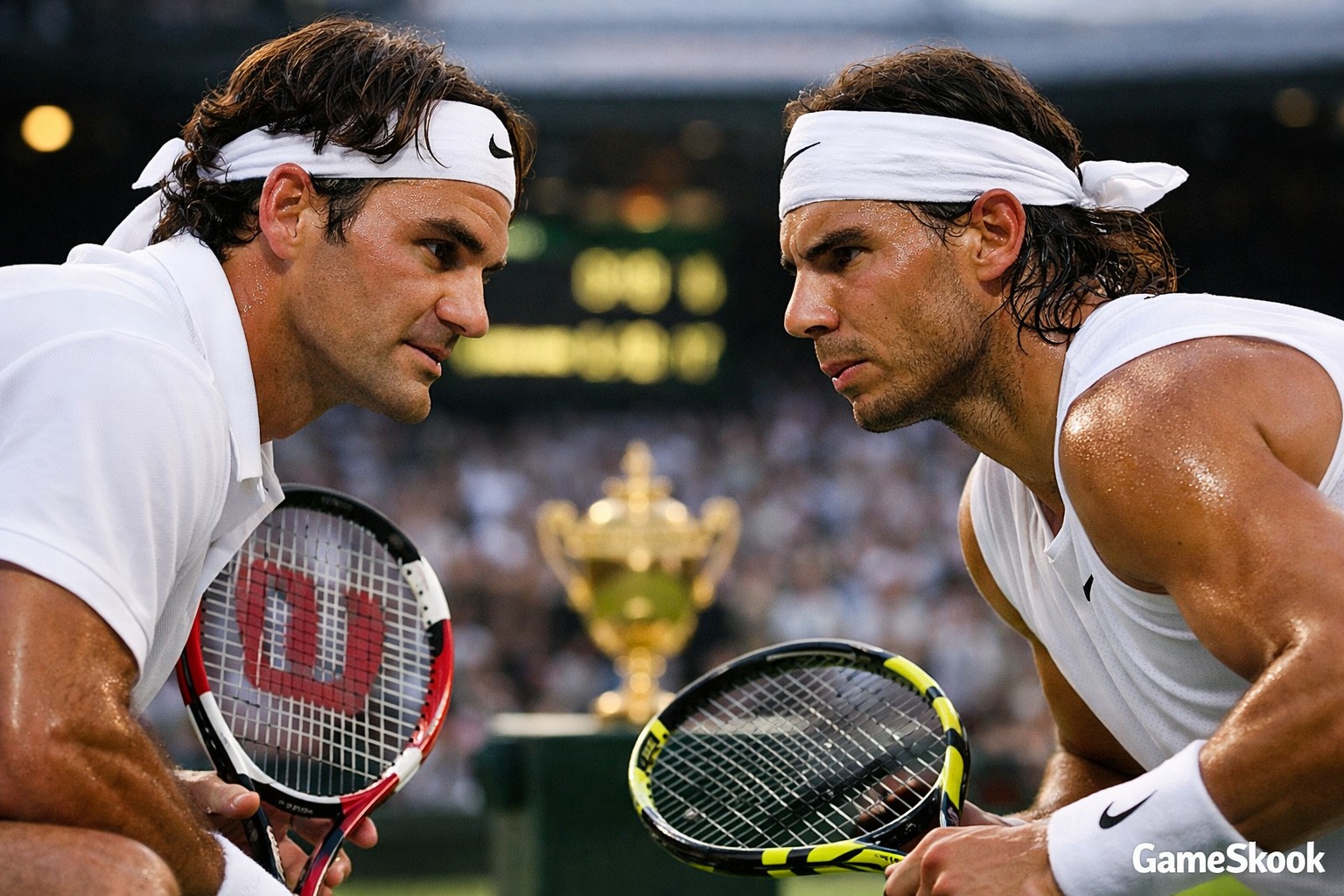
Crowds often forget regular matches. Rare nights stay alive forever. One such night arrived in 2008 on the famous grass courts of London. The final match between Roger Federer and Rafael Nadal turned into more than a fight for a trophy. It became a moment that reshaped how tennis fans judged courage, skill, and rivalry.
The clash unfolded during the Wimbledon Championships 2008, where tradition met raw emotion. Fans expected excellence from both men. Few imagined a match that would stretch across nearly five hours and leave a permanent mark on the sport.
A meeting of calm control and fierce pressure
Federer walked onto Centre Court as the most trusted champion on grass. Five straight Wimbledon titles already defined his dominance. His serve hit sharp lines. His movement looked smooth and light. His volleys closed points in seconds. Every action showed balance and control.
Nadal carried a very different style. Clay courts had shaped his reputation as a fighter. Many still doubted his strength on grass. His heavy topspin forced high bounces. His deep returns kept rallies alive. His legs never seemed to slow. He built pressure slowly and waited for errors.
From the first rally, the contrast stood clear. Federer searched for speed and quick wins. Nadal searched for depth and patience.
The early shock that changed the tone
The match did not ease into drama. Nadal broke Federer’s serve early in both opening sets. Each set ended 6–4 in Nadal’s favor. These breaks came from smart placement and steady pressure, not chance.
His spinning shots pushed Federer wide. The backhand struggled under high bounce. Points lasted longer than Federer preferred. Momentum leaned toward Nadal with every game.
Fans began to sense history forming. The grass no longer felt like Federer’s safe ground.
Federer’s refusal to surrender control
Champions react when danger appears.
Federer stepped closer to the baseline and took sharper risks. He rushed the net more often. His forehand found tighter angles. The third set reached a tense tiebreak that Federer claimed with calm focus. The fourth followed the same path, and again he survived under heavy pressure.
Rain delays stopped play twice. Each pause raised tension across the stadium. After nearly four hours, the score stood even. Two sets each. The light grew softer. The crowd waited in silence before every serve.
The final stretch that tested every limit
At that time, Wimbledon used no deciding-set tiebreak. Victory required a two-game lead. That rule turned the fifth set into a war of nerve and stamina.
Long matches like this often raise questions about tennis outcomes, including situations such as a walkover, which affect rankings, prize money, and tournament progress.
Games grew longer. Break points appeared and disappeared. Movement slowed but focus stayed sharp. Neither player gave ground easily.
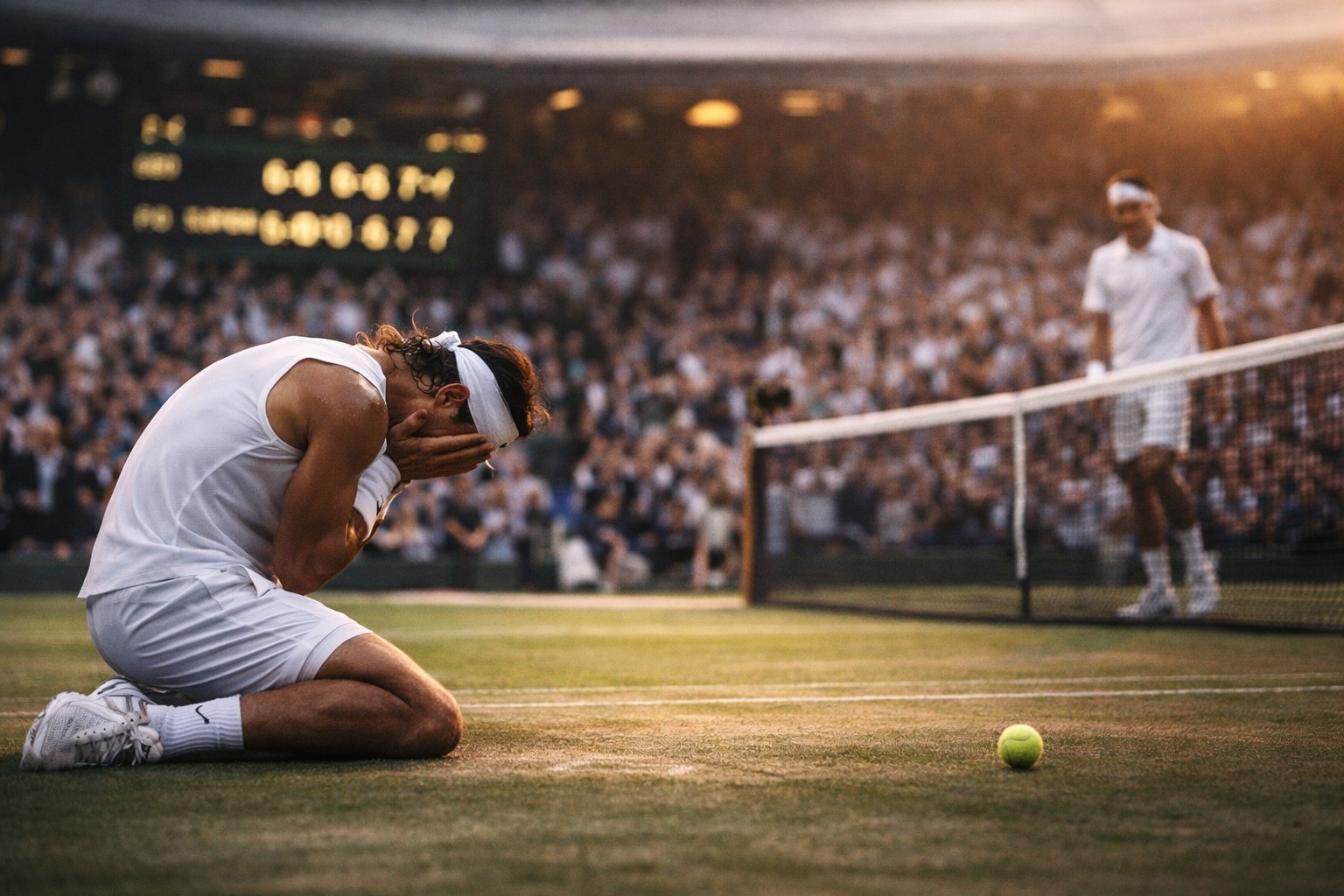
At 7-7, Nadal finally broke Federer with fearless returns and deep shots. Moments later, he served for the championship. Federer chased one last forehand. The ball drifted just beyond the line.
The scoreboard read 6-4, 6-4, 6-7, 6-7, 9-7. Nadal fell onto the grass in disbelief as the crowd roared.
Hours later, no one had moved from the screen.
Every point felt like the last.
When Nadal finally won, the room stayed silent for a few seconds before everyone reacted at once.
It felt less like a tennis match and more like history unfolding.
The quiet tactics that tipped the balance
Pure talent kept the match close. Strategy decided the winner.
Nadal stood far behind the baseline on returns, which gave him time against Federer’s powerful serve. He targeted Federer’s backhand again and again, using high bounce to break rhythm. He stayed patient and let pressure build instead of forcing winners.
Federer found success only after late net attacks shortened points. Earlier aggression might have changed the flow, yet Nadal’s steady approach held firm when it mattered most.
Small choices shaped a match that lasted nearly five hours.
Mental strength under rare conditions
Rain interruptions rarely appear in Grand Slam finals. This match had two. Each pause cooled muscles and broke rhythm. The stadium noise rose as darkness approached.
Nadal returned after every delay with the same sharp focus. Federer needed extra games to regain flow. In a contest this close, that edge proved crucial.
Great matches often reward calm minds more than stylish shots. This night proved it clearly.
A moment that shifted tennis history
Before 2008, many believed grass courts belonged almost entirely to Federer. That belief ended that evening. Nadal showed he could rule beyond clay and challenge on any surface.
The rivalry exploded worldwide. Television audiences grew fast. Young players studied both styles. Tennis gained fans who loved the drama as much as the skill.
Many former champions still call this match the greatest ever played, not only for quality but for emotion and tension.
How rivalry pushed both men higher
This final marked only one chapter of a long story. They met again in major finals across every surface. Australian Open battles stretched into five sets. French Open matches confirmed Nadal’s dominance there. Records continued to fall as each forced the other to improve.
Federer strengthened his backhand and court approach. Nadal sharpened his serve and attack. Without such pressure from one another, neither career may have reached legendary heights.
True rivalry builds greatness.
Lessons players still carry forward
Coaches often study this match with young athletes.
- Patience often beats panic.
- Smart court position weakens strong serves.
- Mental calm decides tight contests.
- Mid-match change separates champions from good players.
The trophy marked victory. The match taught competition at its highest level.
Other finals often compared to this classic
Several modern battles stand close in memory. The Australian Open final in 2017 between Federer and Nadal delivered another emotional showdown. The 2012 Australian Open final between Novak Djokovic and Nadal pushed physical limits to extremes. Federer’s long 2009 Wimbledon duel with Andy Roddick created record drama.
Each tested nerves and stamina. Many fans still return to 2008 as the highest standard.
Why legendary matches never disappear
Scores fade with time. Stories remain strong.
Historic contests show how pressure shapes decisions, how respect grows between rivals, and how preparation meets chaos on the biggest stage. They turn players into legends and nights into history.
The 2008 Wimbledon final did exactly that.
The evening tennis entered a new era
When Nadal lifted the trophy under dark skies, the sport changed direction. One ruler no longer stood alone. Two giants now pushed each other forward.
That match felt like a marathon, a chess match, and a test of will in one moment. Fans chose sides. Tennis gained a rivalry that defined a generation. Every great battle since has chased the level set on that unforgettable Wimbledon night.
Frequently Asked Questions
What made the 2008 Wimbledon final so special in tennis history?
The match between Roger Federer and Rafael Nadal lasted almost five hours and stayed tight until the final game. Both players showed control under pressure and refused to give easy points. The long final set and late finish added drama that fans still remember today.
Which playing style helped Nadal succeed on grass that night?
Nadal focused on deep shots and high bounce to push Federer out of rhythm. He kept rallies long and forced tough returns. This steady pressure led to mistakes at key moments.
How did this match change their competition in later years?
The final proved Nadal could win on Federer’s strongest surface. After that night, both players raised their level across every Grand Slam. Their rivalry became one of the most respected in sports history.
Why does this match still matter to tennis fans today?
The match showed heart, focus, and smart play at the highest level. Every set brought new tension and momentum shifts. Many fans still use it as the example of what a great tennis battle looks like.