

Cricket matches rely on one document more than any other record. That document is the cricket score sheet. It keeps the match fair, clear, and easy to review. Every run, wicket, and over must appear on it. Without a proper score sheet, even a great match can end in confusion.
Many fans watch cricket on television and never think about how scores stay accurate. Local matches use score sheets too, even in school grounds and small clubs. Professional games follow the same base rules but apply more detail. Understanding these rules helps players, scorers, and fans read match data with confidence.
Cricket score sheets may look complex at first. Lines, boxes, and symbols fill the page. Each mark has a purpose. Once the basics become clear, the sheet feels simple and logical. Anyone with interest in cricket can learn how it works.
This guide explains cricket score sheet rules used in both local and professional matches. It covers symbols, layouts, scorer duties, and common mistakes. The article also answers questions people often ask online. Every section uses plain English and clear explanations.
What Is a Cricket Score Sheet
A cricket score sheet is a written record of a match. It shows how many runs each team scores. It also lists wickets, overs, extras, and player details. Officials rely on it to confirm the final result.
Local matches often use paper score sheets. Professional matches may use digital systems, but the same rules apply. The layout stays similar across formats. The goal remains accuracy and clarity.
Each team gets its own batting section. Bowlers also have a dedicated area. Extras like wides and no balls appear separately. The score sheet must reflect the match ball by ball.
Why Cricket Score Sheet Rules Matter
Rules keep scoring fair and consistent. Without rules, two scorers might record the same event in different ways. That causes disputes and errors.
Local matches depend on these rules to avoid arguments. Professional matches depend on them to protect records and statistics. Umpires and match officials trust the score sheet when questions arise.
Clear rules also help new scorers learn faster. When everyone follows the same system, matches run smoothly.
Basic Layout of a Cricket Score Sheet
Most cricket score sheets share a common structure. The page divides into clear sections. Each section has a specific role.
The batting section lists player names and how they get out. The bowling section tracks overs and runs conceded. Another section records extras and totals.
Local score sheets may look simpler. Professional score sheets include more columns. Even with these differences, the core layout remains familiar.
Match flow and turning points become easier to understand when viewed through a clear match timeline, especially in high-pressure games.
Batting Section Rules Explained
Each batter receives one clear row on the score sheet. The scorer records every ball faced in the exact order it happens. A dot marks a delivery where no run is scored. Numbers show runs made from the bat on that specific ball.
The batting row must reflect the flow of the innings. If a batter scores runs on consecutive balls, each entry appears separately. This method helps anyone review the innings later without guessing what happened.
When a batter gets out, the scorer writes the dismissal type in the same row. Common examples include bowled, caught, lbw, or run out. The scorer also notes the bowler’s name or the fielder involved. This record confirms how the wicket fell and who earned credit.
If a batter remains not out at the end of the innings, the scorer marks this clearly. This mark affects total calculations and batting averages. A missing not-out mark can change match statistics, so accuracy matters.
How Runs Are Recorded Correctly
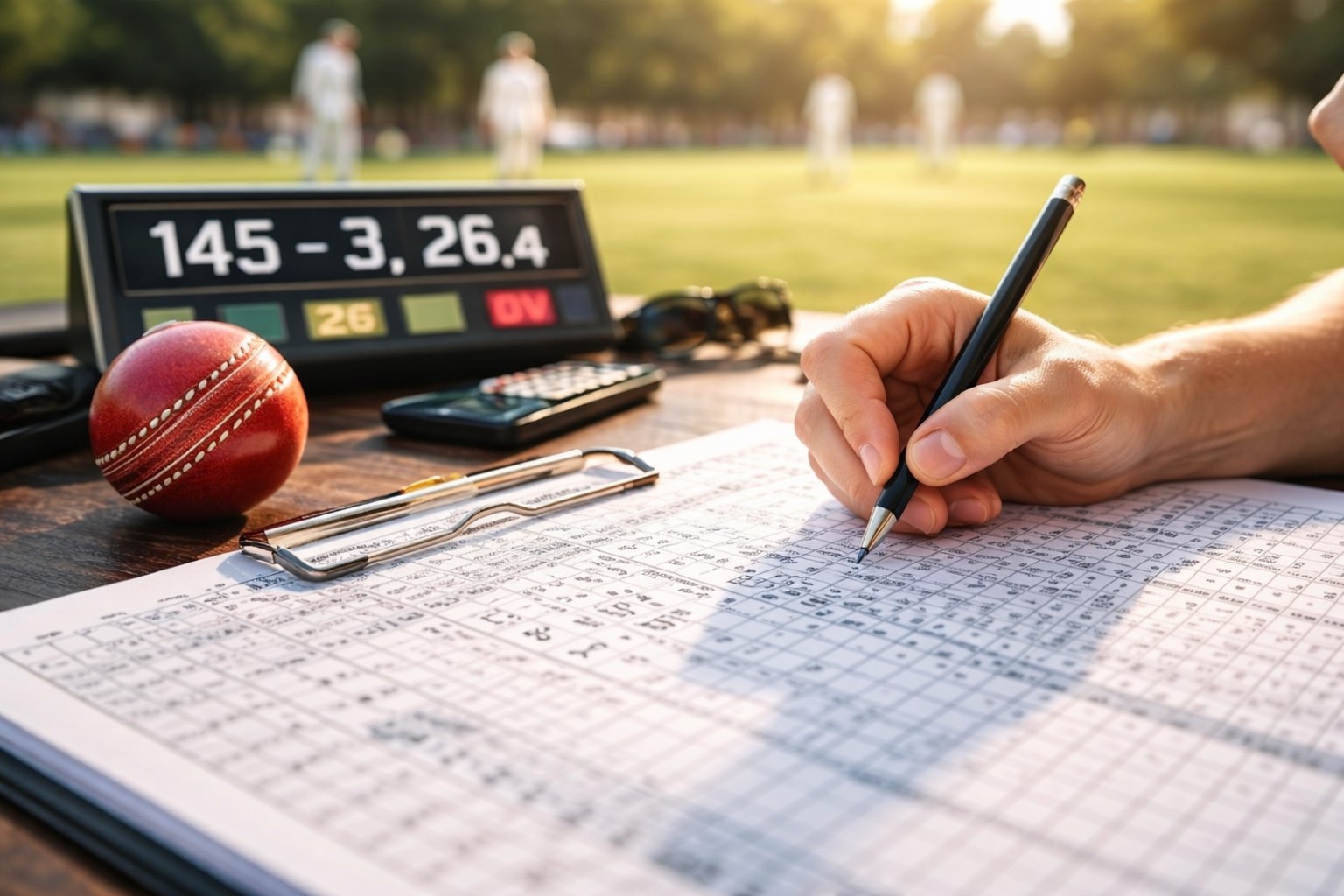
Runs scored from the bat always appear in the batter’s row. Each number must match the exact ball faced. A single appears as “1.” A boundary shows as “4.” A maximum shows as “6.” These entries help track scoring speed and shot selection.
Local matches often use quick marks to save time. Professional matches require precise ball-by-ball records. Every run must line up with the correct delivery and over number. Even one mismatch can cause scoring disputes.
When a batter completes more than one run on a delivery, the scorer writes the total runs for that ball. The scorer does not split the runs across multiple boxes. Clear and neat writing helps prevent confusion during over checks and final totals.
Accurate run recording allows teams to trust the score sheet. It also helps players review their performance after the match.
Recording Extras on the Score Sheet
Extras add runs that do not belong to any batter. These runs still count toward the team total. Common extras include wides, no balls, byes, and leg byes. Each type follows a clear rule on the score sheet.
Wides receive the mark “Wd.” No balls use the mark “Nb.” Byes appear as “B,” and leg byes appear as “Lb.” These symbols help scorers save space and keep records clear. Each symbol must appear next to the correct delivery.
Extras appear in a separate column on the score sheet. The scorer also adds them to the overall team score. Professional matches track extras closely because they affect bowling figures and match analysis. Even one missed extra can change final totals.
Bowling Section Rules
The bowling section records each bowler’s contribution during the match. It shows overs bowled, total runs conceded, and wickets taken. This section helps teams review bowling performance after the match.
An over consists of six legal deliveries. Wides and no balls do not count as legal balls. The scorer must record these deliveries correctly without moving the ball count forward. This rule keeps over totals accurate.
Local matches often record only basic bowling details. Professional matches include extra data such as maidens and economy rates. Clear records help officials and players trust the score sheet.
Over Completion and Ball Count Rules
Each completed over must show six legal balls. Scorers often mark each delivery with dots or numbers. This method helps confirm over completion at a glance.
If a bowler delivers a wide or no ball, the ball count stays the same. The scorer records the extra and repeats the ball number for the next delivery. This step ensures the over does not end early.
This rule causes many errors during fast-paced matches. Focus and careful marking help prevent mistakes. Accurate ball counts protect match fairness and scoring reliability.
Wicket Recording Rules
Every wicket on the score sheet must show how it fell. The scorer records the dismissal type and names the players involved. This record confirms how the batting side lost a player and who earned the dismissal.
Common dismissal types include bowled, caught, lbw, stumped, and run out. Each dismissal uses a standard abbreviation that scorers recognize. The scorer also notes the bowler’s name or the fielder responsible. Clear records help avoid disputes after the match.
Professional matches require exact detail for every wicket. Local matches still need clear and readable entries. A complete wicket record protects match fairness and keeps player statistics accurate.
Partnership and Fall of Wicket Rules
Many score sheets include a fall of wicket section. This section shows the team score when each wicket falls. It also reflects how the innings progresses over time.
The scorer writes the total team score and the over number at each wicket. This information helps coaches and analysts review momentum changes during the match. It also helps fans understand key turning points.
Local matches may skip this section to save time. Professional matches treat it as essential match data. A clear fall of wicket record adds value to the score sheet.
Captain and Team Details
Team details appear at the top of the score sheet before the match starts. This area lists the team name, captain, and match format. Some sheets also include venue and date details.
The scorer must confirm correct spelling and proper player order before play begins. Small mistakes at this stage can cause confusion later in the match. Correct details help umpires and officials rely on the score sheet.
Professional scorers always double-check this information. Local scorers benefit from the same habit. Accurate team details set a strong foundation for the entire match record.
Match Result Rules on Score Sheets

The final section of the score sheet shows the match result. This section clearly states which team won and the margin of victory. It confirms the outcome in simple and direct terms.
Common result formats include phrases such as “won by 5 wickets” or “won by 20 runs.” The scorer must calculate this margin carefully using final totals and remaining wickets. Even a small math error can change the official result.
Tied matches and no-result games need clear notes in this section. Rain, poor light, or interruptions often cause no results. Professional matches also include player of the match details in this area. This record helps preserve match history.
Similar result rules also apply in other sports, where a walkover result gets recorded when one side cannot continue or compete under official match rules.
Differences Between Local and Professional Score Sheets
Local score sheets focus on essential match details. They track total runs, wickets lost, and overs bowled. This level of detail suits club, school, and friendly matches.
Professional score sheets include deeper statistics. They track strike rates, economy rates, maidens, and detailed extras. These details support player analysis and official records.
Despite these differences, the core rules remain the same. Clear writing, correct totals, and proper symbols matter at every level. Accuracy and consistency remain the main goals.
Common Scoring Symbols and Their Meaning
Cricket scoring (PDF) uses symbols to save space and time. Each symbol has a fixed meaning that scorers recognize across formats.
A dot shows a delivery with no run. A “4” marks a boundary. A “6” marks a maximum. A “Wd” shows a wide delivery. Other symbols represent no balls, byes, and leg byes.
Learning these symbols helps new scorers work faster and avoid mistakes. Professional scorers rely on them during fast-paced matches where every second counts.
Duties of a Cricket Scorer
A cricket scorer must stay focused from the first ball to the last. Every delivery matters and needs accurate recording.
The scorer follows umpire signals closely. When the umpire signals a wide, no ball, or wicket, the scorer records it immediately. Clear coordination prevents confusion.
Professional matches use two scorers. Both scorers compare records at intervals to confirm accuracy. Local matches benefit from similar checks when possible.
Common Mistakes in Cricket Score Sheets
Mistakes often occur during fast scoring phases. Boundaries, quick singles, and frequent extras increase pressure on the scorer.
Ball count errors also appear often. Missing a wide or no ball can break the over sequence and affect totals. This issue creates confusion during result calculation.
Strong focus and neat writing reduce these problems. Experience and practice help scorers build confidence. Professional training further improves scoring accuracy.
The over count ended early, and the final total caused confusion between both teams.
After reviewing the score sheet ball by ball, the error became clear.
This experience showed how careful ball counting and extra recording protect match fairness.
How Score Sheets Help Players Improve
Score sheets reveal clear patterns from a match. Batters can review where runs come from and which shots work best. This review helps them adjust shot choice in future games.

Bowlers also benefit from score sheet data. They can review economy rate, wicket count, and consistency across overs. These details highlight strengths and areas that need work.
Local players use score sheets to track personal growth over time. Professional players rely on them for detailed performance review. The score sheet becomes a learning tool, not just a match record.
Digital Score Sheets in Modern Cricket
Many matches now use digital score sheets and scoring apps. These tools follow the same rules as paper-based scoring. The format may look different, but the principles stay the same.
Digital tools help reduce common errors and speed up score updates. They also allow live score sharing for fans and officials. Quick access to data improves match coordination.
Even with digital systems, scorers must understand core scoring rules. Technology supports accuracy but does not replace knowledge. A trained scorer remains essential in every match.
Many scorers also rely on tools like Cricketeer Scoreboard to manage digital scoring, sync match data, and track player statistics with greater accuracy.
Frequently Asked Questions (FAQs)
How do you fill a cricket score sheet step by step
A scorer starts with team and player details before the match begins. Each ball then gets recorded in order. Runs, extras, and wickets appear exactly as they happen. Totals get checked at the end of each over and again at the end of the innings.
Who is responsible for maintaining the cricket score sheet
The official scorer maintains the score sheet during a match. Local matches often assign a trained volunteer or team official. Professional matches use certified scorers who work alongside umpires.
What symbols are commonly used in cricket score sheets
Cricket score sheets use short symbols to save space and time. Dots show balls without runs. Numbers show runs scored. Abbreviations mark extras and dismissal types. These symbols follow standard cricket scoring rules.
Can one scorer handle a full cricket match alone
One scorer can manage a local match if focus stays strong throughout play. Professional matches usually use two scorers to cross-check records. This method helps avoid mistakes during fast scoring periods.
Why accuracy matters in a cricket score sheet
Accurate scoring protects match fairness and final results. Players, officials, and fans rely on score sheets for records and analysis. Even small errors can affect statistics and match outcomes.
Why Cricket Score Sheets Matter
Cricket score sheets form the backbone of every match. They protect fairness and keep match details clear. Local games and professional contests follow the same core rules.
Learning these rules helps players, scorers, and fans understand cricket better. The score sheet tells the full story of each innings and every key moment.
Accuracy, focus, and clear writing matter more than speed. Practice builds confidence over time. Anyone can master cricket score sheet rules with patience.
A well-kept score sheet respects the spirit of cricket. It turns every delivery into a lasting and trusted record.