
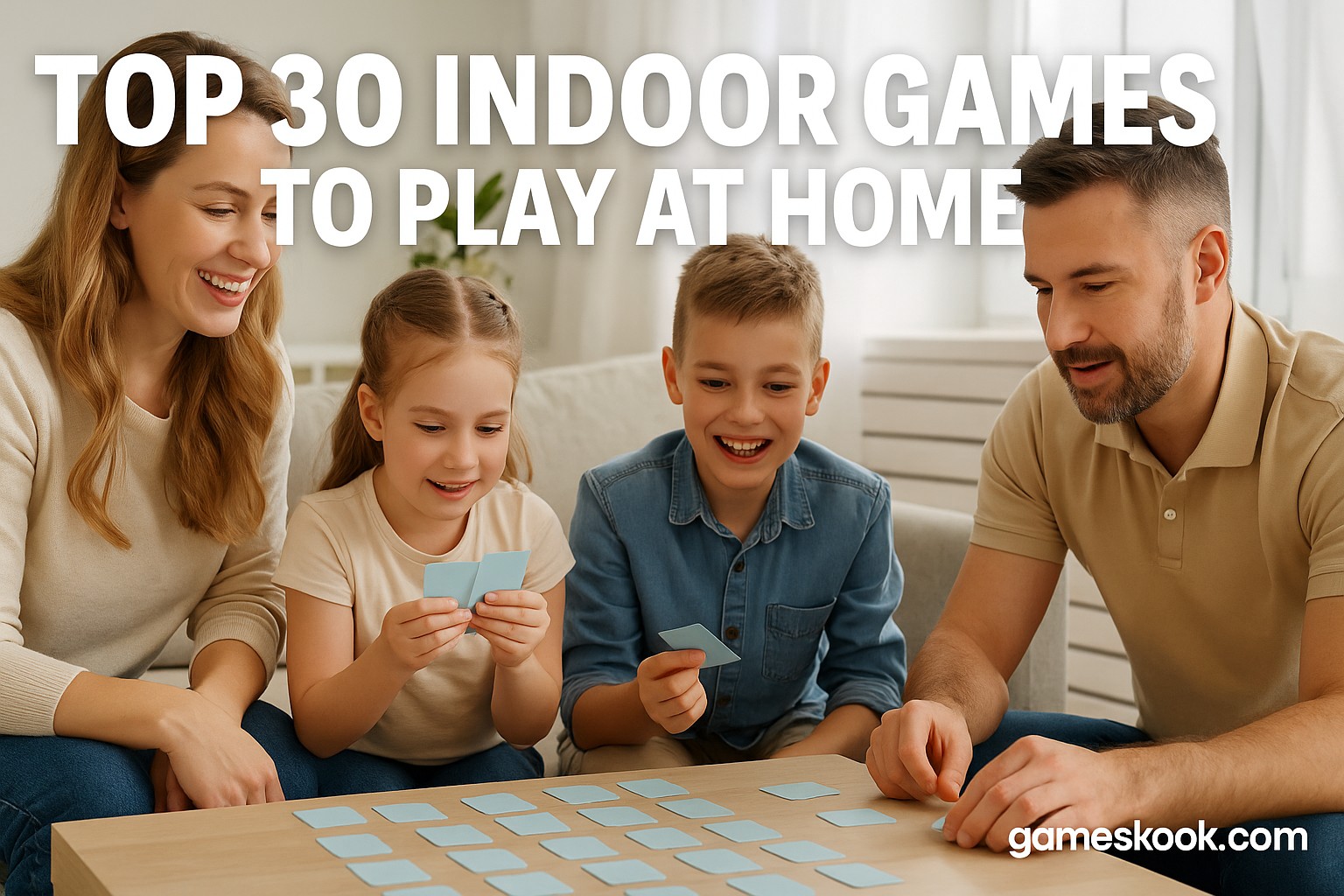
Many families seek fun ways to spend time together. Indoor games offer a simple path to joy at home. Such games need little space. They bring laughter, connection, and friendly challenge without leaving the house.
Indoor games suit all ages. Children, teens, and adults can join. You need just a small room or living area. You can play on rainy days or quiet evenings.
Good indoor games also help focus, memory, and social skill. They can ease boredom. They can turn dull hours into warm memories. This guide shows 30 great games. You can pick those that match your space, number of players, and mood.
You will find games that use cards, papers, toys, or just your mind. You will find fast games and slow ones. You will find quiet games and active games. Use this guide to build your own fun library at home.
Why Indoor Play Matters
Indoor games bring people close. They spark chat and laughter. They build teamwork. They help children share, wait, listen, or help. They teach patience, respect, and friendly rivalry.
Indoor games often cost little. You can use simple items: paper, dice, cards, or old toys. You do not need big space or fancy gear. That makes them ideal for small homes or apartments.
Games at home give safe entertainment. You avoid traffic, late returns, or bad weather. You stay in a known, calm place. You control time and rules. You can pause and resume.
Indoor play helps mind and mood. Many games test memory, logic, or reaction. They keep mind sharp. Other games offer calm and fun. They relieve stress after a long day. They offer bonding time with friends or family.
Some players prefer digital indoor games or PC versions of classics. Before you download, make sure your system can handle the game. Use this smart PC game requirement checker to find out if your setup is ready.
How to Choose the Right Game
Think about space first. If space is small, prefer games that need little room. Choose table‑top games or quiet card games.
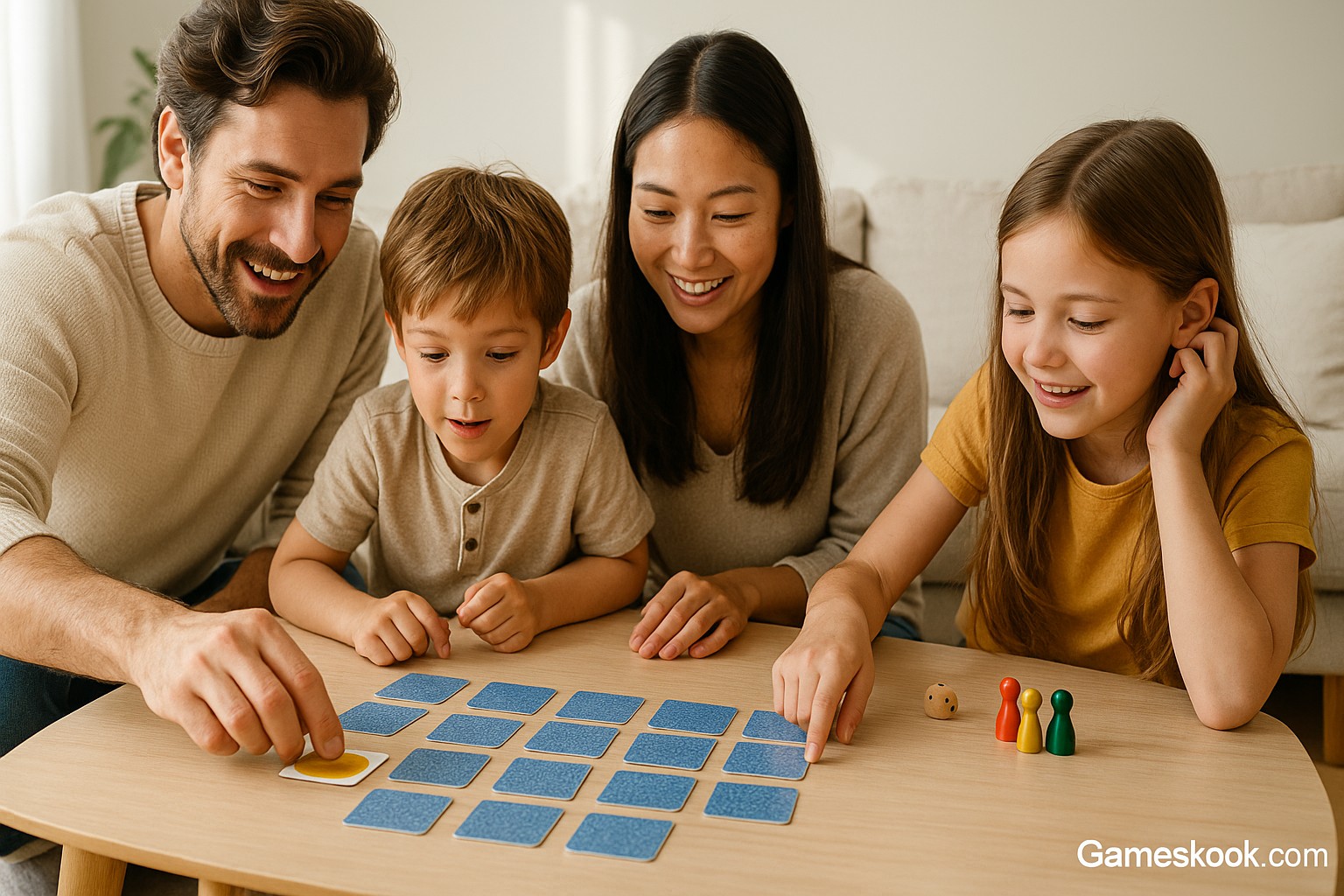
Check how many players you have. Some games need two or more. Some work better with three or four. Some fit large groups. Pick games that suit your group size.
Match energy level to mood. When you feel lazy, pick calm games. If you want fun and noise, pick active games.
Consider your group’s age and interest. Younger kids may like memory or matching games. Teens may enjoy strategy or creative games. Adults may like logic or word games.
Make sure the game needs easy setup. Medium or long setup can spoil interest. Pick games you can start in minutes.
Quick Game Finder Table
Need a fast way to pick a game? This simple table shows the game name, type, age range, energy level, and if you need to set anything up.
Use it to choose games that fit your room, mood, or group size.
| Game Name | Type | Age Group | Energy Level | Setup Needed |
|---|---|---|---|---|
| Uno Showdown | Card Game | 7+ | Low | Yes |
| Balloon Sit Swap | Action Game | All Ages | High | Minimal |
| Silent Story Relay | Mind Game | 8+ | Quiet | None |
| Indoor Treasure Hunt | Team Game | 6–12 | Medium | Yes |
| Tabletop Putt Game | Solo Game | 10+ | Low | Yes |
| Name That Sound | Quiet Game | 5–10 | Low | None |
| Freeze Dance | Movement Game | All Ages | High | None |
| 20 Questions | Word Game | 8+ | Quiet | None |
| Memory Match Grid | Puzzle Game | 6+ | Low | Yes |
| Pass the Clap | Group Game | All Ages | Medium | None |
This table gives a snapshot of each game’s vibe. Want quiet? Choose a low-energy mind game. Need to burn energy? Try something from the action list.
You can mix games too-start with a quiet one and end with something active.
Why Indoor Games Matter in 2025
Screens often fill our hours. Indoor games bring balance. They ask us to laugh, move, and think.
Kids get off screens. Parents relax. Teens join instead of scrolling.
These games build trust, calm nerves, and open minds. A fun night indoors can heal more than we think.
Sports-Themed Indoor Games for NFL Fans
Fans of the Cleveland Browns or Denver Broncos can turn living rooms into stadiums with fun football-inspired indoor games. Check out our breakdown of the top performers and shocking lows in their recent matchup to fuel game-day challenges with stats and team pride.
Top 30 Indoor Games to Play at Home
Here is a list of 30 fun indoor games. I divide them into four groups. You will find a mix of card games, board‑style games, active games, and quiet puzzles. Use what fits best.
Best 8 Card and Paper Games

1. Memory Match Cards – Simple Game You Can Play Anywhere
Memory Match Cards is a quiet indoor game. It does not need screens, sound, or large space. You only need pairs of cards that look the same. You can buy a full set or make one at home using paper.
Each card must have one match. Spread the cards face down on a table or floor. Make sure players cannot see the pictures. Players take turns. On each turn, one player flips two cards.
If both cards match, the player keeps the pair and takes another turn. If the cards do not match, they go face down again. The next person takes their turn. The game ends when all pairs are gone.
The player with the most pairs wins. This game helps memory. It also builds focus, patience, and quick thinking. Kids enjoy it. Adults find it relaxing. Older people use it to stay sharp.
You can create a set at home. Cut paper into squares. Draw two of each shape, number, or animal. Keep the backs blank. You can also draw small marks to hide the front side.
Memory Match fits into school, home, or road trips. You can play it during breaks or after dinner. It needs little setup and brings real value.
2. Simple Quiz Quiz – Easy Game for Kids and Families
Simple Quiz Quiz is a fun game you can play at home. It works well for family nights or classroom breaks. You only need paper, a pen, and a bowl.
Write one question on each slip of paper. Use easy topics like animals, colors, math, or general facts. Fold each slip and drop it into the bowl. Mix them well before you begin.
Each player takes one slip during their turn. They read the question aloud and give an answer. A correct answer scores one point. A wrong answer scores zero. Then, the next player takes a turn.
You can set a fixed number of rounds or play until all slips are gone. The player with the most points wins the game.
This game helps children learn new facts. It also sharpens memory, focus, and listening. Parents and teachers use it to teach in a fun way. It suits small or large groups. You can play it anywhere with basic tools.
3. Word Chain – A Fast Game to Build Vocabulary
Word Chain is a word game you can play without any setup. It helps players learn new words and think fast. You only need two or more people to start.
One player says a word. The next player must say a word that starts with the last letter of the word before. If the word is “dog,” the next player can say “goat.” After “goat,” the next word must begin with “t.”
Players must not repeat words. You can use a timer if you want to make it harder. The game continues until someone breaks the chain, repeats a word, or takes too long.
This game trains the brain. It grows vocabulary and keeps the mind alert. Kids can learn new words. Adults enjoy it as a quick challenge. It suits travel time, indoor play, or classroom breaks.
4. Twenty Questions – A Classic Guessing Game
Twenty Questions is a smart game for two or more players. One player picks an object and keeps it secret. The others try to guess what it is.
Players take turns asking yes-or-no questions. They must ask smart questions to narrow down the object. They have up to twenty questions to figure it out. If someone guesses the object, they win that round.
Once the object is guessed or the team uses all twenty questions, the round ends. A new player then thinks of the next object.
This game teaches deductive thinking. It builds logic and creativity. It suits all ages. You can play it at home, on a trip, or during a break.
Twenty Questions needs no tools. It works with just words and ideas. It helps players learn to think clearly and ask better questions.
5. Story Builder – Fun Group Game with Words
Story Builder is a simple word game. One player starts with a single word. The next player adds another word to continue the sentence. Each player adds one word on their turn.
The goal is to build a full story, one word at a time. You can stop when the story feels complete or after a set number of turns. When the story ends, read it aloud. The result often sounds funny or strange.
This game sparks ideas. It brings laughter and helps players think in new ways. Kids enjoy silly stories. Adults like the surprise in each round. You do not need paper, cards, or tools-just people and words.
6. Charade Cards – Act and Guess Game at Home
Charade Cards is a fun action game. You write simple actions or animals on small paper slips. Fold them and place in a jar or bowl. Players take turns. One player draws a slip and acts it out without speaking. Others guess what it is.
You can use animals, sports, jobs, or everyday actions. Add a time limit to make it exciting. Use a timer or count down aloud.
This game needs no gear or setup. It fits all ages. It helps children move and express ideas. It also brings laughter to family time. You can play it in small or large groups.
7. Coin or Paper Flip Game – Quick Game of Chance
This game is fast and easy. Use a coin or fold a paper with two marked sides. Each player picks heads or tails. Flip the coin or paper. If the result matches the player’s choice, they get one point.
Play until someone reaches a target score. You can set it at five or ten points. If both players score at once, play one more round to break the tie.
This game teaches luck and fairness. It suits two players. You can use it to settle a tie or pass short time. It works anywhere—at home, in class, or on a trip.
8. Dice Race – Fast Math Game with Dice
Dice Race is a simple game using one or two dice. Each player rolls the dice and adds the numbers. The total adds to their score. Players take turns. The first player to reach the target score wins.
You can choose a score like 30 or 50 to end the game. Add your own rules to make it harder. If a player rolls two of the same number, you can skip their turn or subtract points.
This game builds number skills. It also adds a bit of chance. Children learn how to count fast. Adults enjoy the quick pace. It takes little space and fits any time of day.
Word Puzzle Games That Train the Brain
Word puzzles help improve memory and focus. Games like crosswords or word search spark fun without mess. Try Blossom Word Bloom to challenge your mind daily. It’s free, quiet, and perfect for solo play at home.
Strategy and Board‑Style Games to Play Indoors
9. Tic‑Tac‑Toe
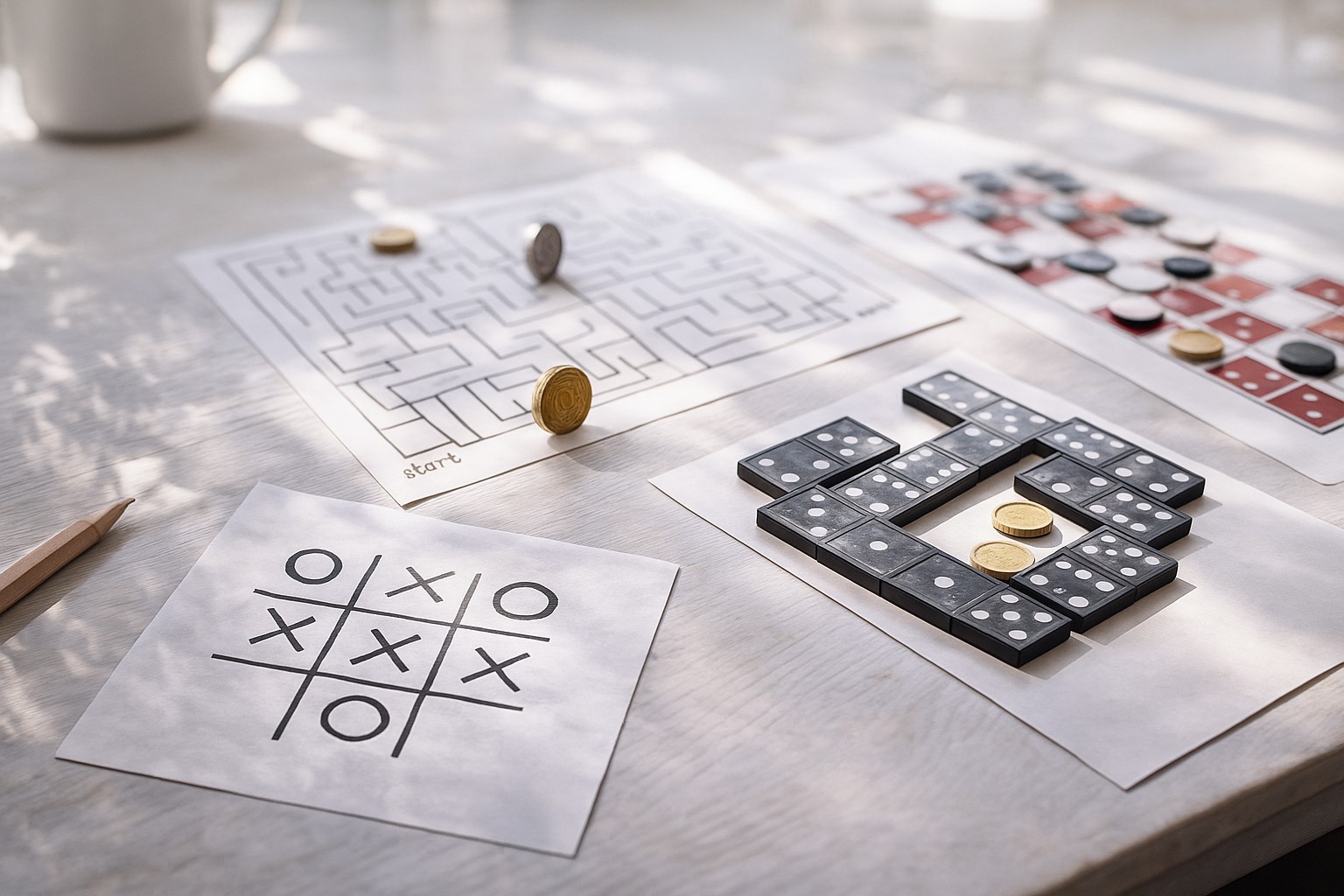
Tic‑Tac‑Toe is easy to learn and quick to play. Draw a grid with three rows and three columns. Two players take turns. One marks X, the other marks O. The first player to get three marks in a row wins.
The row can go across, down, or diagonal. This game teaches turn order and basic planning. Children enjoy it, but adults can play it too.
10. Paper Maze Race
Draw a maze on paper. Use coins or buttons as player tokens. Each player starts at the same spot. The goal is to reach the end first. Add a timer to make it more fun.
This game helps players focus. It improves quick thinking and sharp eyes. You only need paper and a pencil to begin.
11. Classic Dominoes
Dominoes use tiles with numbers. Each player tries to match a tile with the number at the end of the chain. If no match, the player skips a turn. The round ends when no player can move.
Count points to find the winner. Some rules reward high scores. Others reward low ones. Dominoes build number skills and logic. Players learn to plan ahead and watch the board.
12. Paper Checkers
Draw a checkerboard on a piece of paper. Use coins or bottle caps as pieces. Each player starts with 12. Pieces move forward diagonally. The goal is to capture all of the opponent’s pieces.
You can play with one king rule or without. This paper version works well for older children and teens. It gives the same challenge as the classic game.
13. Hide the Treasure
Draw a grid map on paper. Secretly choose one square to hide a treasure. Each player guesses one square per turn. After each guess, give a clue. Say “hot” if close or “cold” if far.
Keep guessing until someone finds the treasure. Then, choose a new square and play again. This game uses logic, memory, and luck. Kids and teens enjoy it the most.
14. Story Board
Cut out pictures from magazines or print them at home. Each player picks two pictures. Then, each player tells a short story using their two pictures.
The story can be silly or serious. You can change the theme to match moods. This game works best with teens or adults. It helps players build imagination and think in new ways.
15. Guess the Drawing
One player draws an object or scene on paper. Others try to guess what it is. Use a timer if you want a challenge. You can allow only five guesses per round or give hints if needed.
This game works for all ages. It builds focus, drawing skill, and quick guessing. No board or setup is required.
16. Indoor Bowling
Use six plastic bottles and a soft ball. Line up the bottles like bowling pins. Each player gets two rolls per round. Count how many pins fall each time.
Keep score to find the winner. Use soft throws to avoid noise. This game is safe for kids and fun for adults. It works well in small spaces like halls or living rooms.
17. Sock Toss
Roll up a pair of socks. Use a box, bucket, or basket as the target. Stand a few feet away. Each player throws three socks per turn. You can keep score or play for fun.
This game takes no setup. It builds aim and calm under pressure. Players of all ages enjoy it.
18. Balloon Tap-Up
Blow up a balloon. Hit it into the air. Players must keep the balloon up and stop it from touching the floor. You can use a string across the room as a net to create teams.
This game keeps kids active. It uses soft movement and brings big laughs. It suits small rooms and does not make noise.
Themed Indoor Games That Match Your Style
Every home has a different mood. Some days call for quiet fun. Other days need loud laughs and bold moves. Billy Bob-style games mix energy, humor, and group fun in wild ways. Explore the top 7 Billy Bob games you must try to add a twist to your next game night. These styles work well for parties, sleepovers, or rainy afternoons.
Mini Tip: Keep Things Fun and Fair
Small tips to improve game night:
- Rotate who goes first each round
- Keep scores visible to reduce arguments
- Let kids help change game rules
- Use timers to keep pace
- Let everyone win sometimes
Quiet and Mind Games for Calm Indoor Play
19. Silent Story Relay
Silent Story Relay is a game for groups. Players sit in a circle. One person thinks of a word and whispers it to the next. The word moves around the circle one person at a time.
The last player says the word aloud. Everyone then hears how much the word changed. Sometimes it stays the same. Sometimes it sounds completely different. That makes the game fun and full of surprise.
This game teaches listening. It also trains memory. It works best with five or more people. It suits quiet rooms and gives light fun without noise.
20. Shadow Guess
Shadow Guess is best at night or in a dark room. Use a lamp to cast a shadow on the wall. One person makes shapes using hands or small objects. Others try to guess what it is.
The player can form animals, tools, or letters. Keep the shapes clear. Let everyone take a turn. You can also give clues or limit the guesses.
This game builds focus. It also sparks creativity. It works well in small spaces and suits both kids and adults.
21. Puzzle on Table
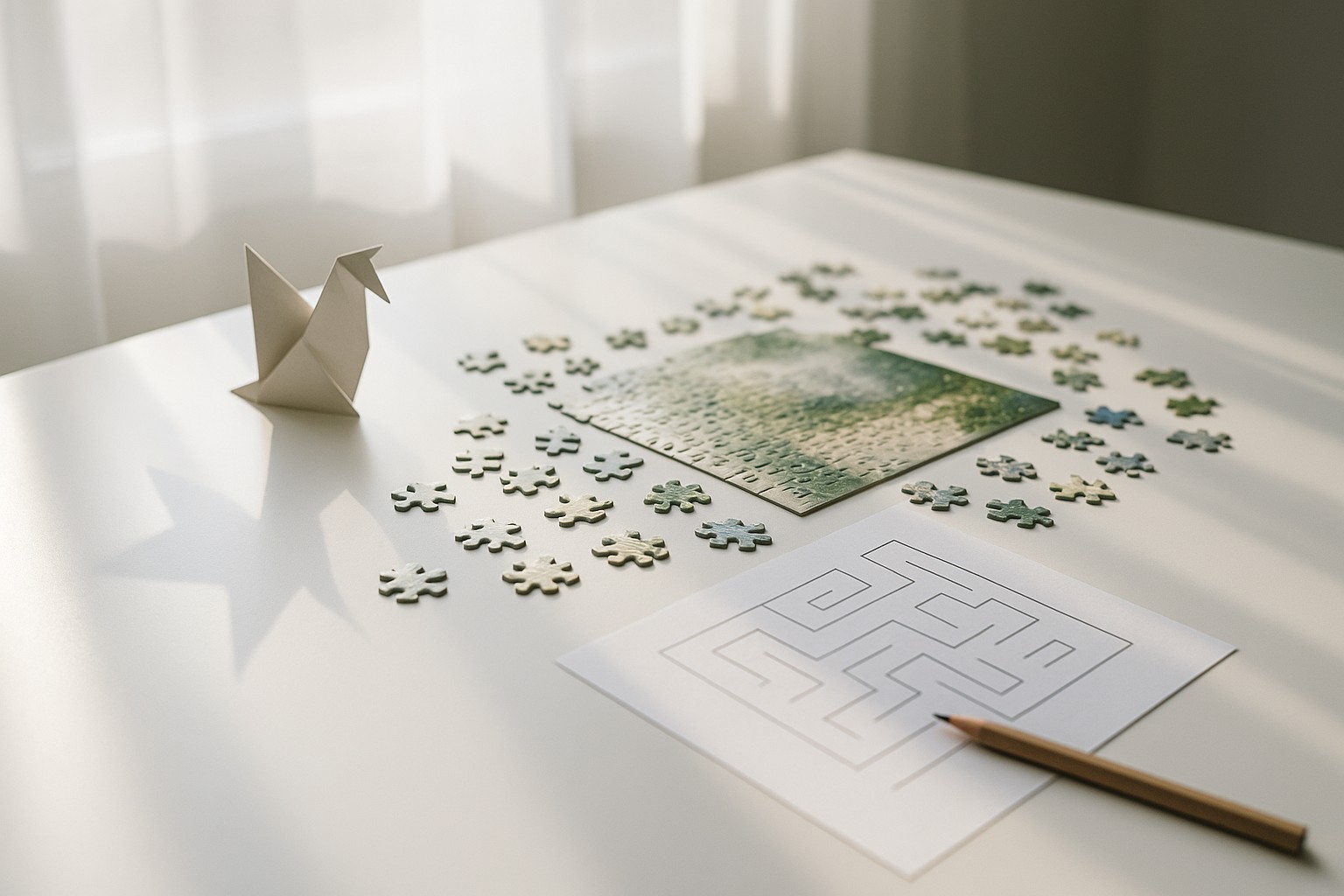
This game needs a puzzle set or a picture cut into small parts. Each player works to fit the pieces. You can race to finish or solve the puzzle as a team.
Use simple puzzles for younger kids. Try harder ones for teens or adults. You can print a photo and cut it into squares if you have no puzzle set.
This game builds patience. It trains the mind to spot shapes and patterns. It suits quiet afternoons or slow evenings. Players can talk as they work, or play in silence.
22. Blind Drawing Challenge
In this game, players draw with their eyes covered. One person gets blindfolded. Others guide them with simple words. They give short steps like “draw a circle” or “add a line on top.”
Once the drawing is done, remove the blindfold. Then compare it with the shape that was described. The results often bring laughter and surprise.
This game builds trust and teamwork. It also improves listening and giving clear directions. It fits kids, teens, and adults. No tools are needed beyond paper, a pencil, and a cloth for blindfolding.
23. Memory Tray – Object Recall Game
Memory Tray is a short game that trains the brain. Place 8 to 12 small objects on a tray. Show the tray to players for 30 seconds. Then cover the tray or remove the items.
Each player writes down as many objects as they remember. The one who lists the most wins. You can repeat with new items to make more rounds.
This game sharpens attention. It improves short-term memory. It works best in calm rooms. No talking or noise is needed during play.
24. Word Search Puzzle – Easy DIY Game
Word Search is a letter grid puzzle. Draw a square or rectangle filled with random letters. Hide full words across the grid. Place them left to right, top to bottom, or in diagonal lines.
Players try to find each word as fast as they can. You can set a theme like fruits, animals, or colors. You can also give clues or print copies for groups.
This game helps reading and spelling. It builds focus and pattern spotting. It suits quiet time in classrooms, homes, or travel.
25. Number Puzzle – Basic Math Game on Paper
Number Puzzle is a paper game with a grid of numbers. Players look for patterns, sums, or hidden number paths. The goal can change. You may ask them to find three numbers that add up to ten or spot all even numbers in a row.
Use a timer to make it more fun. Start with small grids for younger kids. Use bigger grids for teens or math fans.
This game trains the brain. It improves logic, counting, and math speed. It works well during study breaks or solo play.
Active and Group Games for Indoor Fun
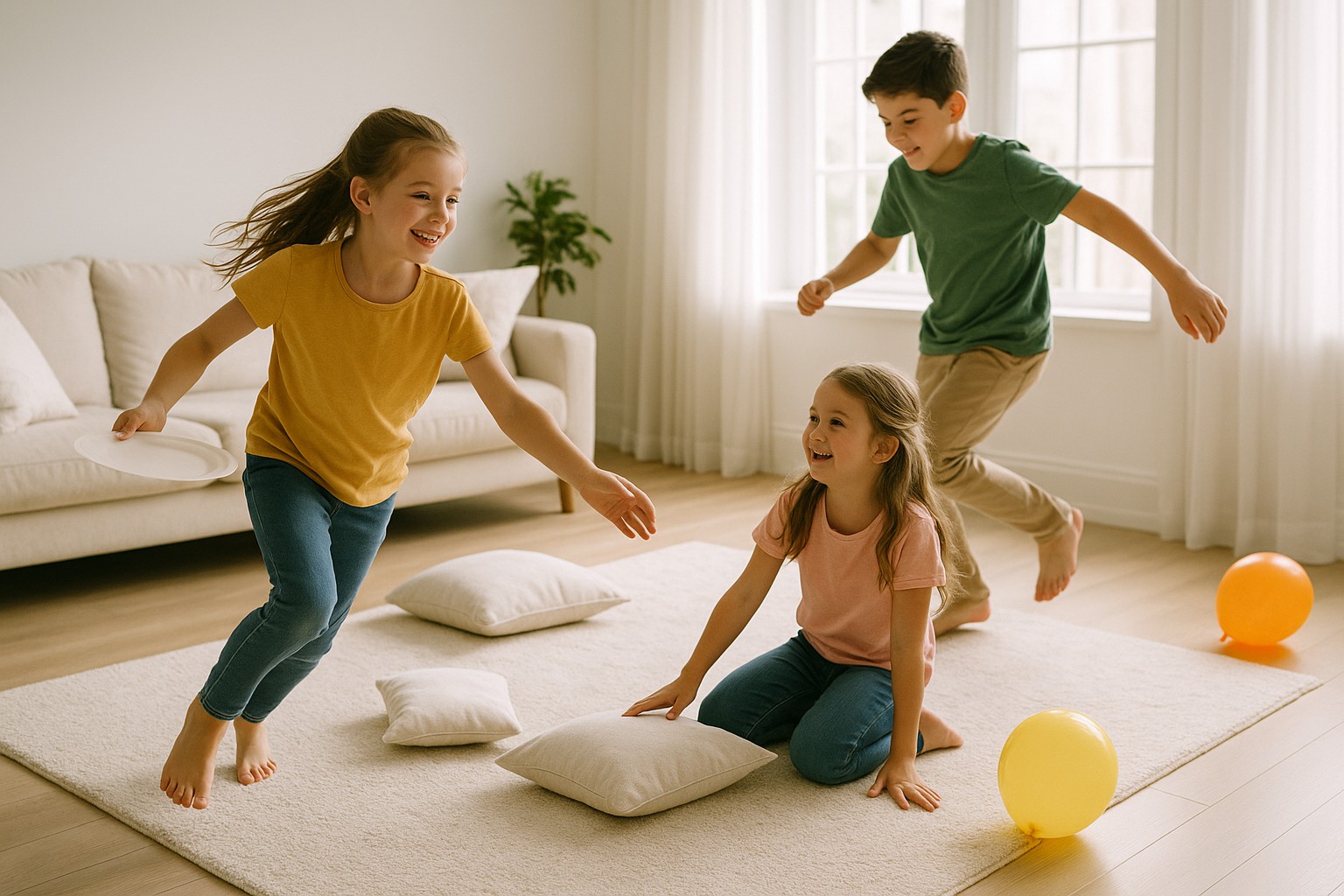
26. Freeze Dance – Stop and Win
Freeze Dance is a high-energy indoor game. Play a song using a speaker or phone. Players dance as the music plays. When the music stops, they must freeze in place. Anyone who moves is out or loses a point.
Play many rounds until only one player remains. That person wins the game. This game suits kids and works well during parties or family play. It brings energy without making a mess.
27. Obstacle Course – Safe Indoor Challenge
Use soft items like chairs, pillows, or boxes. Set up a simple path through the room. Players crawl, step over, or go under objects to reach the end.
Use a timer to track how long each player takes. The fastest player wins. You can make it easier for small kids or harder for teens. This game builds balance and body control. It also adds laughter to the day.
28. Indoor Relay Race – Pass Without Drop
Split players into two teams. Give each team a paper plate. Place a small item on top like a ball, sock, or spoon. Each player walks across the room while holding the plate. They must not drop the item.
After reaching the end, they hand the plate to the next teammate. The first team to finish wins. You can also pass the plate over the head or under the legs in a line.
This game builds focus, teamwork, and balance. It suits groups of four to eight players. It fits school halls, bedrooms, or large living rooms.
29. Balloon Sit Swap – Musical Chairs with a Twist
Balloon Sit Swap is a fun group game. Use soft balloons or pillows as seats. Place them in a circle on the floor. Play music or count out loud. Players walk around the room.
When the music or count stops, everyone must sit on a balloon or pillow. In each round, remove one seat. The player left without a seat is out. Repeat until one player remains. That person wins.
This game brings energy without loud noise. It works well with small groups. It suits homes, parties, or classrooms. It adds laughter and light competition.
30. Indoor Treasure Hunt – Clues and Discovery
Indoor Treasure Hunt is a smart and fun game. Hide small toys, coins, or treats in safe spots around the house. Write clear clues or draw a simple map. Let players follow the clues to find the hidden items.
You can play in teams or one-on-one. Use easy clues for younger kids. Try harder clues or riddles for teens. Each step leads to the next clue until they reach the final treasure.
This game builds logic and reading skill. It teaches teamwork and problem-solving. It fits any home space and needs no special tools. Kids love the challenge. Teens enjoy the race to win.
How to Make Indoor Fun Work Long‑Term
Rotate games often. Do not stick to same game. Change group size. Vary energy level. Vary quiet games and active games. This keeps interest alive.
Keep a simple game box. Use old cards, paper, coins, balloons, socks, or soft balls. Replace broken items. Use safe objects. Check floor and space before playing.
Set simple rules. Let kids help decide. Use short rounds. Keep time limits. Avoid long play if children get tired. Make play time a treat, not a chore.
Encourage fair play. Praise smart moves. Laugh at mistakes. Let winners admit luck. Teach respect for loss. Keep fun first.
Let older children take lead. Let teens suggest new games. Let adults join or watch. Combine generations. This allows bonding across ages.
Plan periodic game nights. Mark one day a week or month. Invite extended family or friends via video call. Use same games across distance. Games help connect hearts.
Frequently Asked Questions (FAQs)
| Question | Answer |
|---|---|
| What are the best indoor games for small spaces? | Games like Memory Match Grid, 20 Questions, and Silent Story Relay work well in tight areas. These need little or no setup and fit in living rooms or bedrooms. |
| Which games can kids and adults enjoy together? | Balloon Sit Swap, Freeze Dance, and Uno Showdown bring fun for all ages. These games mix movement, laughter, and easy rules. |
| How can I keep indoor games fresh and exciting? | Rotate games often. Mix quiet and active play. Add small changes to rules or themes. Keep it fun and fair for all. |
| Are indoor games safe for toddlers? | Soft-play games like Pillow Crawl or Balloon Catch work best. Always watch toddlers closely and avoid small parts. |
| What game works best for a single child at home? | Try Tabletop Putt Game or a solo puzzle challenge. These games help build focus and pass time in a calm way. |
| Can indoor games improve social skills? | Group games like Pass the Clap or Silent Story Relay boost teamwork, listening, and turn-taking. These also build bonds. |
| How many games should I plan for one evening? | Three to five games work well for a fun night. Mix types to match the group’s energy and space. |
| What can I use if I have no board or cards? | Everyday items like socks, cups, spoons, pillows, or paper slips work fine. You only need a spark of creativity. |
Tabletop Games for Deep Play Without a DM
Not all tabletop games need a Dungeon Master. Some offer rich worlds, rules, and storytelling without extra prep. These work well for solo players or small groups who want brainy fun without long sessions. Explore the best tabletop roleplaying games that don’t need a Dungeon Master to find quiet but deep indoor adventures.
Conclusion
Indoor games offer more than just fun. They bring families closer. They create joy without loud noise or big space. Anyone can play-kids, teens, adults, or seniors.
You do not need much to start. A few cards, a balloon, or a piece of paper is enough. Each game adds something good. Some train the brain. Others build trust. All create moments you will remember.
Pick games that match your space and group. Keep things fair. Take turns. Laugh often. Let each round bring smiles and calm. Try new games each week to keep the fun fresh.
A simple game night can turn into a habit. It can bring peace after a busy day. It can fill your home with light moods and happy memories. Play together. Grow together. Let the games begin.
This guide offers general tips for indoor fun at home. Always consider age, space, and safety before trying any activity. Use your best judgment and supervise where needed.